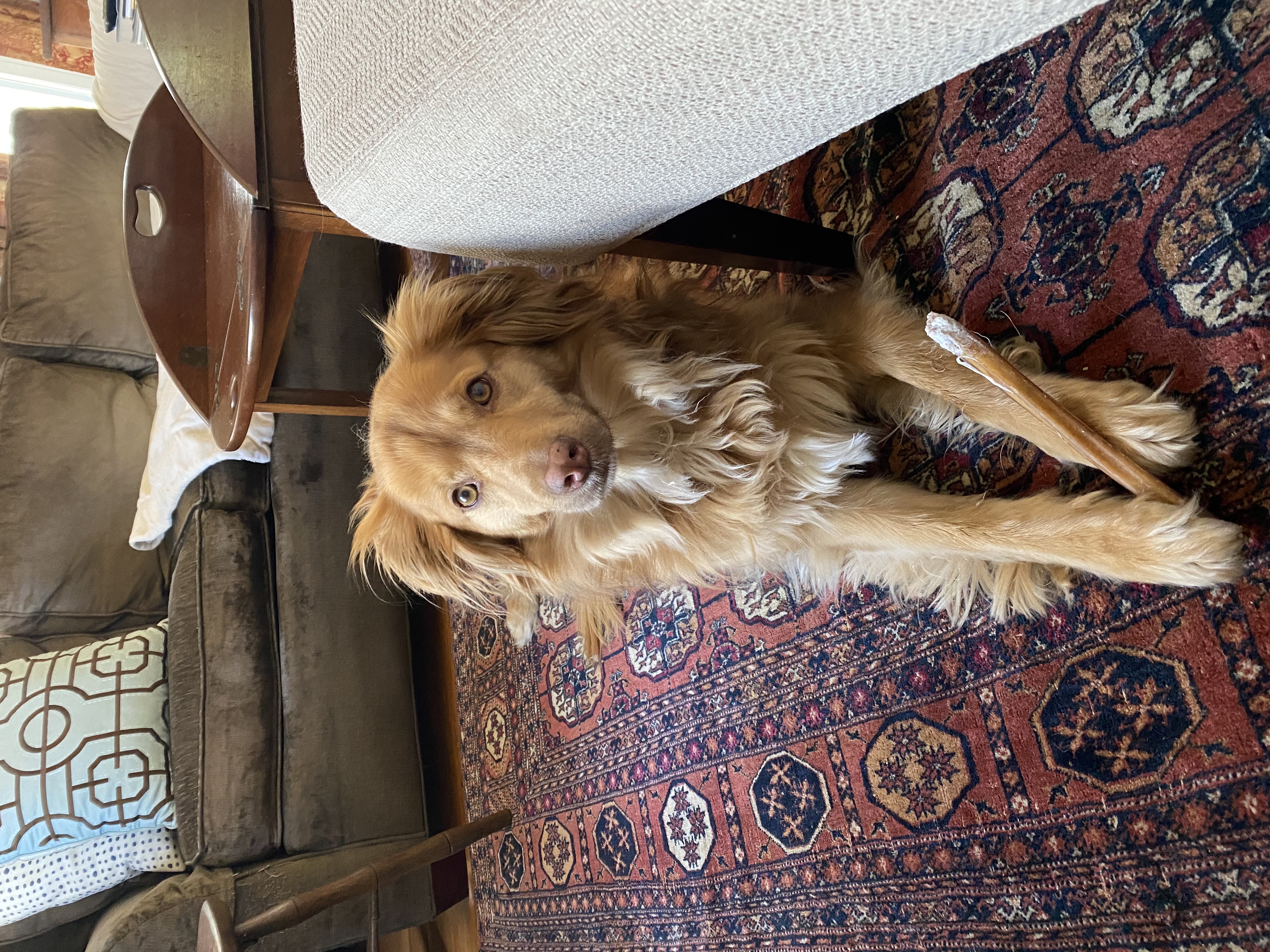
Tilly
Seven Days That Changed Everything
In the late summer of 2016, my family was on Cape Cod for a funeral when a thunderstorm rolled through our hometown on the North Shore (100 miles away!) During that storm, our Nova Scotia Duck Tolling Retriever, Tilly, escaped while at home under the care of a pet sitter.
What followed were seven hellish days that changed my perspective.
My wife and I — along with an incredible group of friends, family and amazing volunteers — searched relentlessly. We combed neighborhoods, coyote-laden woods, rail trails, shelters, and countless online communities. We made flyers in the middle of the night and posted them on every utility pole we could find. We drove the streets and mountain biked through the woods calling her name until our voices went hoarse (not recommended!). We refreshed lost-pet Facebook groups obsessively, chasing fragmented sightings that came in through texts, comments, and phone calls.
There was no clear guidance. No coordination. Just panic colliding with hope — with exhaustion setting in.
The Question No Parent Should Have to Answer
The searching wasn't the hardest part.
By day six, my sons, Alden and Morgan — both pre-teens at the time — were beginning to lose hope. That night, as they were getting ready for bed, they looked at me and asked: "Do you think the coyotes got her?"
They were old enough to know our woods had coyotes. They'd seen the warning signs at the trailhead. And now their puppy/sister/best-friend was somewhere out there, alone.
They wanted to know if she was safe — or if she was already gone.
I didn't have an answer that would comfort them.
I didn't have an answer that would comfort myself.
No parent should ever have to field that question and no child should ever have to ask it.
At that moment, I realized this wasn't just about losing a dog. It was about trauma. Isolation. Helplessness. Watching your family agonize while you search for answers — having no idea if you're doing the right things or wasting precious time.
The People Who Showed Up
We weren't alone in our search.
Local animal control officers went above and beyond their duties. Missing Dogs MA mobilized their network. Sweet Paws Rescue offered expertise, support and comfort. Friends and complete strangers joined search parties, shared our posts, and kept their eyes open.
The compassion was overwhelming.
The willingness to help was immediate.
But even with all these incredible people working to bring Tilly home, we were navigating a fragmented system. Animal control had their protocols. Missing Dogs MA has their amazing network and resources. Sweet Paws Rescue had helpful tools and resources. Friends coordinated through text messages. The days ticked by but after a few sightings, things went quiet.
Everyone was doing their best — but there was no central command, no unified strategy, no way to ensure we weren't duplicating efforts or missing critical areas.
The people were ready to help.
The system to coordinate them didn't exist.
Tilly Came Home: Against the Odds
On the seventh day, Tilly somehow made it home on her own.
She was exhausted and hungry — but for a coyote bite on her thigh and 126 embedded ticks, she was okay. She was alive.
We were incredibly fortunate. Much luckier than some others.
That experience changed me. It made one question impossible to ignore:
Why is there no system to prevent this?
What Those Seven Days Exposed
That ordeal exposed critical gaps in pet safety and recovery:
-
No unified lost-pet alert and recovery system
We were left navigating dozens of disconnected Facebook groups, hoping the right person happened to see our posts.
-
No guided, step-by-step recovery process
In our worst moment, we had no idea if we were doing the right things — or if we were losing critical time.
-
No instantly deployable, trained volunteer network
People wanted to help, but there was no way to coordinate an organized, evidence-based search.
When a child goes missing, we have AMBER Alerts. We are fortunate to have coordinated response systems, trained volunteers, and proven protocols – The AMBER Alert system has proven incredibly effective and successful.
But when a pet goes missing — a family member millions of people love just as deeply — we're left with homemade flyers, social media groups, well-meaning friends, and hope.
Building the System That Should Have Existed
TailTracker began as the tool I wish we'd had — a way to replace panic with a plan, confusion with clarity, and isolation with coordinated action.
It exists to honor the incredible work that animal control officers, rescues, and volunteer organizations already do — while giving them the infrastructure they deserve. We're not replacing these groups. We're designed to be a force multiplier, connecting them: a unified alert system, coordinated recovery protocols grounded in pet behavior science, and a trained volunteer network that can deploy instantly when a pet goes missing.
Because the people who want to help are already out there.
They always have been.
They just needed a better way to work together.
Why This Matters
Today, Tilly is 12 years old and thriving. She's the TailTracker mascot, and every time I look at her, I remember why this work matters.
Because when your pet goes missing, you need two things immediately:
1
You need to know what to do
2
You need to know you're not alone